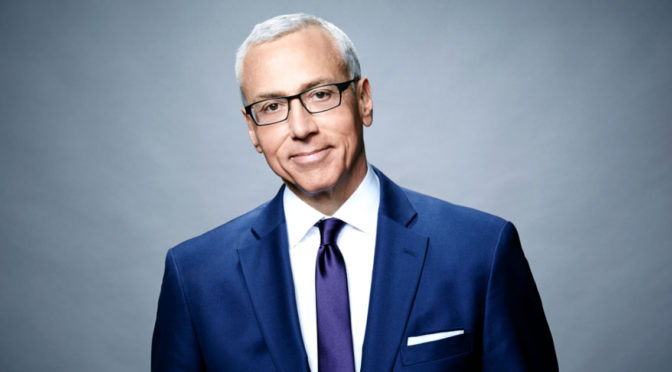
CNN Pressured Dr. Drew ‘Like the Mafia’ to Retract Clinton Health Comments

When HLN cancelled Dr. Drew in August, the network said the decision was “mutually agreed” upon by both network executives and the show’s host, Dr. Drew Pinsky — but according to a report, executives at CNN (HLN’s sister network) pressured Pinsky to retract comments he made about Hillary Clinton’s health before the show was cancelled a few days later.

“CNN is so supportive of Clinton, network honchos acted like the Mafia when confronting Drew,” a source close to Pinsky told the New York Post‘s Page Six. “First, they demanded he retract his comments, but he wouldn’t.”

During a radio interview with John McIntyre on August 16, Dr. Pinsky commented on the release of the Democratic presidential candidate’s medical records, saying that based upon the information he had reviewed with another doctor, he was “gravely concerned not just about her health, but her health care.”

“Both of us concluded that if we were providing the care she was receiving, we would be ashamed to show up in a doctors’ lounge,” Dr. Pinsky concluded. “We would be laughed out. She’s receiving sort of 1950s level care by our evaluation.”

Eight days later, CNN executive vice president Ken Jautz announced that the last episode of Dr. Drew would air September 22.

“Dr. Drew and his team have delivered more than five years of creative shows and I want to thank them for their hard work and distinctive programming,” Jautz said in a statementannouncing the show’s cancellation. “Their audience-driven shows, in particular, were innovative and memorable TV. And Dr. Drew has been an authoritative voice on addiction and on many other topical issues facing America today.”

The cancellation was framed as part of a broader shakeup at HLN, including the end of Nancy Grace’s long-running show on the network.

But a source close to Dr. Pinsky told Page Six that the host’s comments on Clinton’s health led to a series of “nasty” phone calls and emails from network executives that were “downright scary and creepy.”

“Both of us concluded that if we were providing the care she was receiving, we would be ashamed to show up in a doctors’ lounge,” Dr. Pinsky concluded. “We would be laughed out. She’s receiving sort of 1950s level care by our evaluation.”

Eight days later, CNN executive vice president Ken Jautz announced that the last episode of Dr. Drew would air September 22.

“Dr. Drew and his team have delivered more than five years of creative shows and I want to thank them for their hard work and distinctive programming,” Jautz said in a statementannouncing the show’s cancellation. “Their audience-driven shows, in particular, were innovative and memorable TV. And Dr. Drew has been an authoritative voice on addiction and on many other topical issues facing America today.”

The cancellation was framed as part of a broader shakeup at HLN, including the end of Nancy Grace’s long-running show on the network.

But a source close to Dr. Pinsky told Page Six that the host’s comments on Clinton’s health led to a series of “nasty” phone calls and emails from network executives that were “downright scary and creepy.”

Full Article – http://www.breitbart.com/big-hollywood/2016/09/04/report-cnn-demanded-dr-drew-retract-clinton-health-comments-cancelling-show/


Amber Heard Drops Lawsuit Against Johnny Depp’s Comedian Pal Doug Stanhope

Amber Heard is cutting all legal ties to Johnny Depp, including his friend.

Less than a month since settling her divorce from her ex for $7 million in charity donations, the actress has dropped her lawsuit against Depp’s stand-up comedian pal, Doug Stanhope.

According to documents obtained by E! News, Heard’s legal team filed a stipulation for dismissal of the case and for each party to handle their own attorney fees. According to Heard’s lawyer, the dismissal of the case is the result of her larger settlement with Depp.

“I can tell you that Ms. Heard and Mr. Stanhope did NOT reach any agreement to settle the case,” Heard’s attorney said in a statement to E! News. “No money changed hands between them, and there is no confidentiality agreement between them. In fact, I have been unable to reach Doug for some time and given his lifestyle, where he lives and where he travels, I’d be surprised if he even knows anything about the conclusion of the case. Instead, the dismissal of the case against Mr. Stanhope was negotiated as part of a larger deal between Ms. Heard and her ex-husband, Johnny Depp.  Doug Stanhope is one of Johnny Depp’s closest friends, and it appears that Johnny was able to convince Amber to drop the lawsuit against Doug as part of a global resolution of their divorce.”

In the statement, Heard’s attorney also noted that the dismissal was done “without prejudice,” meaning she could re-file the lawsuit within one year of the date Stanhope published his article about Heard. “As far as we know, Ms. Heard has no plans to re-file the case against Mr. Stanhope, but that option remains available to her,” the statement concluded.

Sourced From – http://www.eonline.com/news/792556/amber-heard-drops-lawsuit-against-johnny-depp-s-comedian-pal-doug-stanhope

More federal defendants could avoid prison under new program

  • By LINDSAY WHITEHURST Associated Press
  • Updated

SALT LAKE CITY (AP) — More people charged with federal crimes in Utah could get treatment instead of prison under a new program designed to prevent repeat offenses by addressing the reasons why they commit crimes.

The program is aimed at defendants without long criminal histories or those struggling with substance abuse. People would have to plead guilty to charges before they enter the program. Participation is voluntary, and getting into the program is expected to be competitive.

If they complete the requirements successfully, defendants could see charges dismissed, or they could be put on probation rather than be sent to prison. People who fail will be sentenced under terms they agreed to before entering the program.

The program was designed by a team that included federal prosecutors, defense attorneys, probation agents and judges. It was approved this summer, and officials are expected to meet this month to select the first eight to 12 participants.

“I’m not talking about giving a break to the kingpins,” said U.S. Attorney for Utah John Huber. “I’m talking about people on the fringe who … have a heroin addiction, have a meth addiction, and they’re just trying to get to their next fix.”

Defendants who are picked will be separated into two groups, one for people with little to no criminal history accused of crimes like credit card fraud or minor narcotics offenses.

The second group will be people whose behavior appears to be motivated by drug and alcohol problems facing allegations like mail theft or bank robberies not involving a gun. Some of them will likely have criminal histories.

The program will be overseen by U.S. District Judge Robert Shelby. The defendants will be closely supervised and have to make regular appearances before the team of court authorities as well as being required to complete treatment for things like substance abuse, mental illness or education.

Their participation will last one to two years.

Huber said repeat offenders are costly for the court system and the community.

“If I don’t have to, I don’t want to prosecute someone two and three times over. That’s really a big investment of taxpayer resources on a problem that’s kind of a revolving door,” he said.

While Utah state courts have had a similar system for years, it’s a relatively concept in the federal system.

“The federal system has always been seen as very harsh,” said Greg Petersen, the probation officer in the fledgling program. “This is an opportunity for those people who are charged with federal crimes to get a little bit of a second chance.”

When it came to naming the program, Huber wanted something that would be a positive message in acronym form, so they came up with Utah Alternatives to Conviction Track or U-ACT.

As the court team put together the framework, they studied a similar program in federal court in California.

Some defendants won’t be eligible for the program, including those facing child pornography charges, people deeply involved with major fraud or narcotics distribution, those who could be deported or people accused of specific violent acts.

Sourced From – http://www.dailyprogress.com/more-federal-defendants-could-avoid-prison-under-new-program/article_69f7868f-eabe-5c5a-8b67-ff065ac784d3.html

Personal Injury Lawyer Fed Up With Colleague, Files Class Action

POST WRITTEN BY

Jessica Karmasek

Last week, a Texas attorney who says he is “intimately familiar” with litigation over inferior vena cava filters, or IVCs, filed a proposed class action lawsuit against an Arizona-based law firm for allegedly making unsolicited phone calls to line up potential clients.

Plaintiff John R. MacLean, also known as Scotty MacLean, filed his lawsuit against defendants Arentz Law Group and The Johnston Law Group in the U.S. District Court for the Northern District of Texas, Fort Worth Division, Aug. 25.

MacLean, who received one of the unsolicited calls himself, accuses the firms of ignoring the laws on soliciting clients.

“Sadly, there are attorneys and law firms that ignore ethical rules and barratry laws and use any means necessary in the mad dash to grab as many clients as they can,” he wrote in his 14-page complaint. “These firms blatantly and with complete disregard for the law (and at any cost) unethically and illegally solicit clients.”

According to MacLean’s action, each state has established barratry — or litigation for the purpose of harassment or profit — statutes to protect their citizens from law firms that solicit clients the wrong way.

Full Article – http://www.forbes.com/sites/legalnewsline/2016/09/02/personal-injury-lawyer-fed-up-with-colleague-files-class-action/#51e0214f584d

Has Charitable Giving Become A Profitable Form Of Investing For Pharmaceutical Companies?

Martin Shkreli, the notorious ex-CEO of Turing Pharmaceuticals, made waves last summer when he purchased the rights to Daraprim and raised its price more than 5,000 percent. Physicians use the drug to treat toxoplasmosis, a life-threatening condition that affects those with weakened immune systems (due to HIV/AIDS, etc.).

Days after Shkreli’s purchase, he contacted Patient Services Inc., a charity committed to making medical care more affordable. Shkreli wanted to create a fund for – you guessed it – patients who suffer from toxoplasmosis.

Patient Services Inc., or PSI, jumped at the opportunity, suggesting an initial donation of $22 million, including $1.6 million of its operational costs. Shkreli countered with an offer of $1 million and $80,000 of the company’s costs. This was a paltry offer, considering that Daraprim now costs $60,000 to $90,000 for six-week treatment in light of Shkreli’s price hike.

And that isn’t the worst of it.

Finding A Loophole

prescription-drug-price-hikes-paying-for-it-summit-behavioral-health

PSI is a copay charity, one of seven large ones in the U.S. health care system. It exists to offer payment assistance to the 40 million Americans who qualify for Medicare, helping them to a smaller copay and smaller up-front costs. Even with the help of copay charities, Medicare recipients were still paying around $3,000 for their Daraprim prescriptions.

American taxpayers shoulder the difference. This is where the controversy of “charitable giving” comes into play. By donating a paltry $1 million to a copay charity, Shkreli was able to collect millions more from Medicare, thanks to his own drug price hike. “Big pharma” benefits, while taxpayers and patients suffer.

The Great Charitable Giving Illusion

Many pharmaceutical companies give the illusion that they participate in charity copay for altruistic reasons. Congress recently released an internal case study of Turing Pharmaceuticals, suggesting that its patient payment programs should be “repeatedly referenced” to promote public relations. Experts explain that giving millions to these copay charities makes pharmaceutical companies look altruistic, when the opposite is actually true.

The real intent of these donations is often to deflect criticism when they hike drug prices, leaving the health care system to pick up the broken pieces.

A History Of Deceit

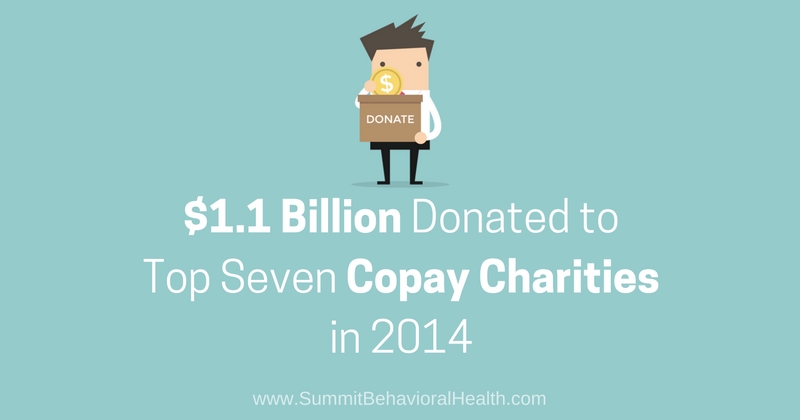
1-1-billion-donated-to-copay-charities-summit-behavioral-health

Daraprim may be the most high-profile example of this charitable funding phenomenon, but it’s certainly not the first. Retrophin, another drug company run by the now-infamous Shkreli, hiked the price on Thiola, a drug intended to treat recurring kidney stones, nearly 2,000 percent. At the same time, his company gave a donation to PSI for kidney stone patient copays.

Read Full Article – https://www.summitbehavioralhealth.com/blog/charitable-giving-profitable-investing-pharmaceutical-companies/