New Viacom board members sought amid Sumner Redstone legal battle

Published: June 9, 2016 11:08 p.m. ET

A shakeup of Viacom Inc.’s board is in the works.

National Amusements Inc., the holding company through which media titan Sumner Redstone controls Viacom VIA, -0.16% , has started the process of recruiting potential board members for the entertainment giant, people familiar with the matter said.

The move comes just a few weeks after Redstone last month ousted Viacom Chairman and Chief Executive Philippe Dauman and board member George Abrams from the board of National Amusements and the trust that will oversee the mogul’s holdings when he dies or is declared incapacitated. Their exit has been seen as a precursor to shaking up the Viacom board and the possible removal of Dauman from the company.

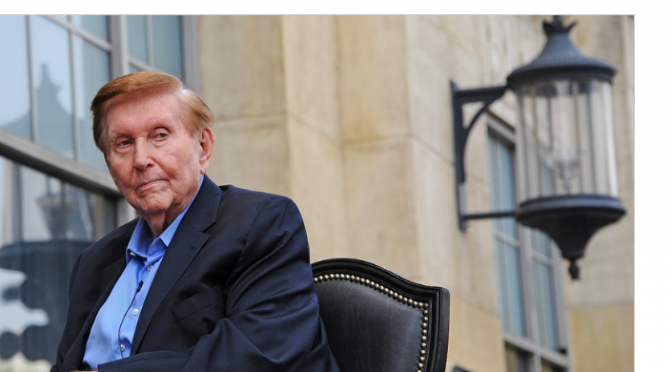
Dauman and Abrams have filed suit to try to block their dismissal from the trust and Viacom’s independent board members indicated last week that they are preparing for a legal fight to keep their seats. The executives and the board members say the 93-year-old Redstone doesn’t have the mental capacity to act on his own free will.

A spokesman for Redstone declined to comment Thursday on possible changes to the Viacom board. Among the names under consideration by National Amusements for the Viacom board are Kenneth Lerer, Nicole Seligman and Judith McHale, according to people close to the process.

cited – http://www.marketwatch.com/story/new-viacom-board-members-sought-amid-sumner-redstone-legal-battle-2016-06-09

Gawker Case Calls Attention to a Go-To Hollywood Lawyer

By

Sourced From – http://www.nytimes.com/2016/05/30/business/media/gawker-case-calls-attention-to-a-go-to-hollywood-lawyer.html?_r=0

LOS ANGELES — In Hollywood, everyone knows the go-to lawyers.

For divorce, there’s Laura Wasser, now representing Johnny Depp in his split with Amber Heard.

For a potential criminal charge, think Blair Berk, who helped Caitlyn Jenner avoid one after a traffic accident in which one person died, or Thomas Mesereau, who got Michael Jackson acquitted.

And if it just seems to be a workaday violation of a famous person’s rights, like slapping Reese Witherspoon’s name on jewelry without her permission? That was the sort of case Charles J. Harder was known for — until now.

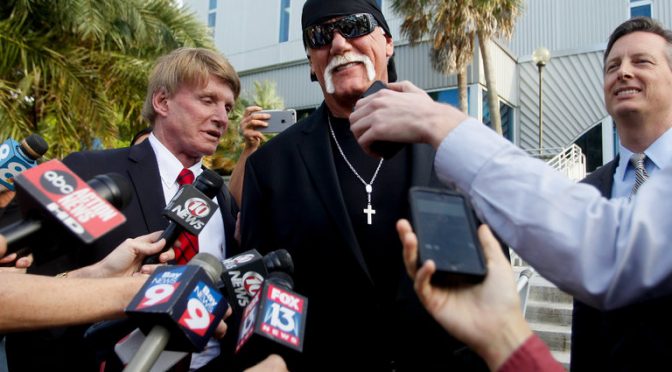
Mr. Harder and his boutique Hollywood firm, Harder, Mirell & Abrams, are suddenly in the limelight. Last week it was revealed that their legal victory for the former professional wrestler Hulk Hogan, in his suit against Gawker Media over publication of a sex video, was secretly underwritten by the Silicon Valley billionaire Peter Thiel. Hulk Hogan, whose real name is Terry Gene Bollea, was awarded $140 million.

Mr. Thiel, a PayPal founder, had a longstanding dispute with Gawker, which published an article in 2007 saying he was gay.

The case, and Mr. Thiel’s place in it, have sent a shudder through many in the news media. At issue is whether Mr. Thiel’s role in the case will motivate other wealthy and powerful people to settle scores by giving money to litigants whose causes they support.

(The Gawker case is likely to continue with appeals, and a June 10 hearing into matters that are still pending.)

A smaller question, but almost as fascinating in Los Angeles legal circles, is this: How did Mr. Harder, a 46-year-old Beverly Hills lawyer who has specialized in protecting stars from having their rights infringed upon by retailers and marketers, wind up in the middle of this free speech fight?

Mr. Harder would not comment for this article. But a close look at his résumé, and conversations with people familiar with his background, who spoke on the condition of anonymity because of confidentiality strictures, suggest that Mr. Harder’s emergence as a power player happened as most things do in Hollywood. That is, through a combination of grit, talent, shrewd calculation — and knowing the right people.

Mr. Harder’s growing connections with celebrities, their representatives and well-heeled entrepreneurs was clearly rooted in a legal action filed in 2009 in state and federal courts here.

In those interrelated cases, Mr. Harder represented six famous actresses — Sandra Bullock, Michelle Pfeiffer, Cameron Diaz, Mandy Moore, Kate Hudson and Diane Keaton — against a group of computer retailers and other companies accused of a somewhat mundane violation. The actresses’ images appeared in catalogs and on websites, on the screens of various devices offered for sale.

After working its way through the courts and mediation, that dispute ended in confidential settlements and dismissal. For Mr. Harder, the outcome was successful enough to set a pattern for succeeding cases that found him and his colleagues, in quick succession, filing various privacy rights claims for a growing client list that included George Clooney, Julia Roberts, Bradley Cooper, Liam Neeson, Jude Law, Halle Berry, Tyra Banks, Clint Eastwood and Ms. Witherspoon.

The claims and the outcomes — settlements, rather than trials — were often similar. In one departure, Mr. Harder in 2011 fought all the way through trial to a $15 million verdict for the producer Vittorio Cecchi Gori in a complicated dispute with a former colleague, Gianni Nunnari, over rights in films that included “300,” “The Departed” and “Shutter Island.”

At least once before, Mr. Harder has tangled with Gawker, in 2012 on behalf of Lena Dunham. He demanded that the site take down a posting of Ms. Dunham’s book proposal, which it largely did, though it continued to display fragments and commentary.

In early October 2012, Gawker refused a demand by Mr. Bollea’s longtime lawyer, David Houston, that it remove the sex video from its site. Mr. Harder — then at the firm Wolf, Rifkin, Shapiro, Schulman & Rabkin — was retained and quickly filed suit.

Whether Mr. Thiel had assured funding at that point is unclear. But Mr. Harder and his colleagues were confident enough of their footing to start their own firm the following January, taking Mr. Bollea and other clients with them.

During the Gawker trial, Mr. Harder, though lead counsel, played a relatively small role in the handling of witnesses, who were often questioned by others. But he currently represents clients in two additional suits against Gawker. One was filed this month in a Boston federal court by Shiva Ayyadurai, who claims he invented email, and another was filed in January in a Manhattan federal court by Ashley Terrill, a journalist. It is not known if Mr. Thiel has played any role in supporting those suits.

Harder, Mirell & Abrams currently has its offices in a small, fashionable building adjoining the Beverly Wilshire Hotel on Rodeo Drive. It is near the Century City quarters of much larger law firms like Ziffren Brittenham and Jackoway Tyerman, and talent representatives like the Creative Artists Agency.

It is also a short drive from the San Fernando Valley, where Mr. Harder grew up. He attended Montclair College Preparatory School, now closed, in Van Nuys, and did his undergraduate work at the University of California, Santa Cruz.

After receiving a law degree from Loyola Law School in Los Angeles, Mr. Harder clerked briefly for Judge A. Andrew Hauk, who was then at the United States District Court for the Central District of California in Los Angeles.

Mr. Harder then spent about a year with the Lavely & Singer law firm. The firm and its principal partners, John H. Lavely Jr. and Martin D. Singer, are known as fierce defenders of prominent celebrities like Arnold Schwarzenegger and Sylvester Stallone.

But Mr. Harder did little trial work for the firm, either then or during a second stint at Lavely & Singer. In between, he worked for a web company, Load Media Network.

In 2001, a case he was working on received attention in The New York Times. His client, Wendy Withers, was told not to report to work at a financially troubled New York ad agency after having left her previous job.

It was a modest claim, and — unlike the Hulk Hogan case, with its huge award — it was settled. Ms. Withers collected two months’ pay.

Parents sue South Glens Falls schools after bullied son kills himself

Parents of boy, 13, who killed himself claim South Glens Falls school failed to address bullying, abuse or to alert them of situation

On the day Jacobe Taras killed himself, he had an appointment to see the school guidance counselor.

A couple weeks earlier, before spring recess and the family trip to Florida and the sunshine and the open waters, the 13-year-old had filled out a survey in class. It was from a school counselor, and it asked whether there was anything anyone needed to talk about. Jacobe wrote “no,” then crossed it out and wrote “maybe.”

He never went to see the guidance counselor that first day back from vacation, on April 13, 2015. And as far as his parents are aware, no one at the Oliver W. Winch Middle School in South Glens Falls ever tried to find out why. Jacobe went home that day and shot himself, leaving a note for his parents describing the torment at the hands of his bullies.

On the day Jacobe Taras killed himself, he had an appointment to see the school guidance counselor.

A couple weeks earlier, before spring recess and the family trip to Florida and the sunshine and the open waters, the 13-year-old had filled out a survey in class. It was from a school counselor, and it asked whether there was anything anyone needed to talk about. Jacobe wrote “no,” then crossed it out and wrote “maybe.”

He never went to see the guidance counselor that first day back from vacation, on April 13, 2015. And as far as his parents are aware, no one at the Oliver W. Winch Middle School in South Glens Falls ever tried to find out why. Jacobe went home that day and shot himself, leaving a note for his parents describing the torment at the hands of his bullies.

Sourced From – http://www.timesunion.com/tuplus-local/article/Parents-sue-South-Glens-Falls-schools-after-7951546.php

Controversial Immigration Law Passed in the USA

Posted By: Daryl Worthington

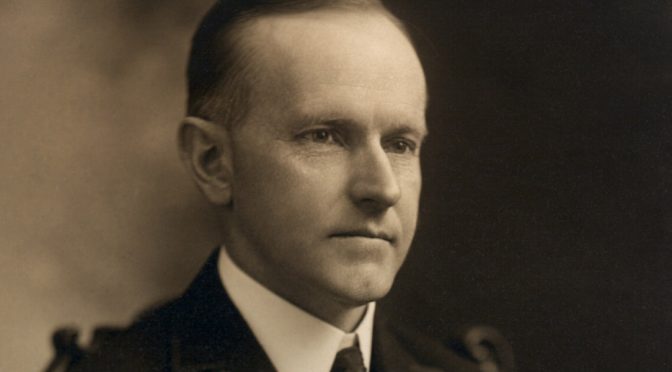
The first major attempt at restricting immigration to the United States was passed into law on 26th May, 1924. Signed by President Calvin Coolidge, the Comprehensive Immigration Act has been known under a variety of names: the National Origins Act, the Johnson- Reed Act and the Asian Exclusion Act, which all give an insight into its controversial goals.

Beyond simply limiting the number of immigrants the USA would accept, the Act was a clear attempt to reduce the number of arrivals from certain countries while encouraging those from others. Immigration quotas were set for individual nations, based on census data from 1890.

Ceilings for the number of new immigrants from each country were set at 2% of the total of any given nation’s residents in the USA as of 1890. It was a system that seemed particularly geared towards putting a barrier up for immigrants from southern and eastern Europe, two regions that had seen a massive influx to the USA since 1890. In the first decade of the twentieth century for example, an average of 200,000 Italians annually entered the USA. Following the 1924 Act, the annual quota was limited to 4,000 a year.

The Comprehensive Immigration Act was an attempt to control the demographics of the USA. Prior to the wave of immigration from southern and eastern Europe, the majority of US citizens had come from Northern and Central European backgrounds; Scandinavia, Britain, Germany. The quotas were designed to preserve this tradition. The annual limit for German immigrants was 51,227, for British 34,007, while that for Spain was just 131 and for Poland 5,982.

For other nationalities, the provisions were even more restrictive. The act barred entry to anyone ineligible for citizenship, essentially ending all immigration from Asia to the USA. This caused particular anger in Japan, which had made a ‘Gentleman’s Agreement’ with Theodore Roosevelt in 1907 to allow more liberal immigration quotas from the country. 26th May was declared a day of national humiliation in Japan, while a Japanese citizen later committed suicide outside the US embassy in Tokyo in an act of protest.

The law did allow some to enter without going through the quota system, those with a university education for instance, or professional training as a doctor or engineer, but it was nevertheless a watershed moment in US immigration policy reflecting new attitudes among the population.

Following the First World War, a wave of isolationist sentiment had spread across the USA, fueled by a desire to avoid further involvement in European wars. At the same time, the spread of Communism across Europe had ignited fears that such ideas could migrate across the Atlantic. Most crucially perhaps, growing competition in the labour market had heightened racial discrimination in the country. Prior to the 1924 Act, state wide legislation had already been issued in California to exclude Japanese people from jobs in industry and agriculture.

Remarkably, the quota system of the Comprehensive Immigration Act remained in place until 1965, when the Hart-Cellar Act replaced the national origins system with one focusing instead on immigrants’ skills and family relationships with existing US citizens.

Sourced From – http://www.newhistorian.com/controversial-immigration-law-passed-usa/6545/