Ohio sheriff says family massacre not linked to drug cartel: report

Officials investigating the execution-style killings of eight family members in rural Ohio six months ago have ruled out the involvement of a Mexican drug cartel and now believe whoever committed the crimes was likely from the area, local media reported.

Eight members of the Rhoden family, ranging in age from 16 to 44, were shot to death in the Appalachian foothills on April 22. Local media previously quoted unidentified law enforcement officials saying a Mexican drug cartel could have been involved after marijuana cultivation sites were found at one of the crime scenes.

“Absolutely not,” Pike County Sheriff Charles Reader told a local TV station on Monday when asked if he believed Mexican cartels were involved in the murders.

“With the nature of the investigation and the things that have been revealed when conducting the investigation there would be no indication to me as to any type of Mexican drug cartel being involved,” he said in an interview with ABC affiliate WCPO Cincinnati.

The sheriff’s office did not immediately respond to a request for comment on Tuesday.

Hannah Gilley, 20; Christopher Rhoden Sr, 40; Christopher Rhoden Jr, 16; Clarence “Frankie” Rhoden, 20; Dana Rhoden, 37; Gary Rhoden, 38; Hanna Rhoden, 19; and Kenneth Rhoden, 44, were killed in what officials said was a planned, “sophisticated operation.” Many of the victims were shot in the head as they slept. Three young children were found alive.

Tim Reagan, a Drug Enforcement Agency (DEA) officer in Cincinnati, told the TV station he also believed there was no link to the Mexican cartel.

“If there was a strong Mexican cartel connection, I’d feel more comfortable telling you, and I don’t see it,” he said.

The DEA directed questions on the case to the Ohio Attorney General’s office.

Dan Tierney, a spokesman for the Ohio attorney general, said the office would not comment on motives prior to an arrest being made but does believe the crimes were committed by multiple people who were familiar with the property.

Full Read – http://www.reuters.com/article/us-ohio-shooting-idUSKCN12I2CS

Celebrity Mad Dash to Supply Legal Grass

Dispelling some of the myths of international family law

The laws of the world concerning family relationships are still predominantly national but too often international families face problems, bureaucracy, misunderstandings and simple obstacles in just living as a family in a country.

A decade or so ago, marrying someone from abroad or living and working in another country was a rarity. Now many millions of people are moving across the globe to relocate as families and as individuals to live and work abroad.Living as a family in another country can be difficult at the best of times, but it is even more difficult when there are relationship difficulties. The laws of the world concerning family relationships are still predominantly national but too often international families face problems, bureaucracy, misunderstandings and simple obstacles in just living as a family in a country.England only applies English law but there are many countries, principally within Europe, that apply the law of another country in a process known as ‘applicable law’.Even within the UK there are different laws. England and Wales are one country for family law purposes. Scotland is a very different country in relation to family law matters and regarding the court structure. The Republic of Ireland is a separate sovereign state. The Isle of Man has its own legal system, although much of Manx law is based on the principles of English common law.Some countries like the US and Switzerland have quite different laws between the different states or cantons. Other countries such as Australia have one combined law for the whole country on some aspects regarding international families but different laws in each state on other aspects, whereas India and Israel have different laws dependant on religion. The EU does not include Denmark for some family law legislation. As international family lawyers we are regularly asked to explain what some have described as ‘myths’ about international family law. We have taken a number of the most common questions to try to dispel some of these issues.

I have to divorce in the country where we were married?

No. One can choose in which country to divorce if there is a connection. It does not have to be the country where you were married. When a couple divorce, apart from issues concerning any children which are paramount, the next big issue is to secure the best possible financial outcome. England has been described as the ‘divorce capital of the world’ as we tend to be generous especially to wives in terms of financial settlement. Each case is different.

I can move to another country to live with our children if our marriage is over?

If the other parent does not agree, no move can take place, not even for a short holiday. An application for permission needs to be made to the court before the move takes place. If the other parent agrees, this is fine but we recommend securing permission in writing stating that the move is permanent. If you are a single mother and the father does not have parental responsibility for the child and no contact provisions are in place, you can move but again we never advise this without notifying the other parent. If you take a child abroad, away from his home without consent, you may find yourself facing criminal proceedings for child abduction which may result in a fine or imprisonment. Huge powers are given to the court to track down parents who abduct children. The Data Protection Act has no status in a search for missing children.

Full Read – http://www.relocatemagazine.com/articles/partner-family-dispelling-some-of-the-myths-of-international-family-law

Judge dismisses personal injury case against Smith & Wesson

A federal judge reasoned Smith & Wesson was not at fault in a personal injury case in which a pistol accidentally discharged and caused a man to lose a finger.

U.S. Judge Todd Campbell followed recommendations from the court when he dismissed the case, according to his order issued Sept. 16 from a Nashville federal court.

A Tennessee couple, Randy and Vicki McNeal, sued the Massachusetts’ gun maker for more than $75,000 in January. According to their complaint, Randy McNeal was shot in the finger as he attempted to make the gun safe inside a gun store in Murfreesboro, a town just outside of Nashville. They claimed a loose screw on the built-in laser sight of their Bodyguard .380 pistol prevented the slide from locking in position.

The couple’s lawsuit says McNeal dropped the gun as he tried to lock the slide back, which he was having trouble because the screw obstructed the locking mechanism, and the gun discharged when he tried to catch it. Afterward, he needed the small finger on his left hand amputated.

The court’s report cited past rulings that state an injury is not proof of a defective product, a product failure or malfunction does not necessarily make a company liable, and the company has no duty to create an “accident proof” product.

Full article – http://www.guns.com/2016/10/04/judge-dismisses-personal-injury-case-against-smith-wesson/

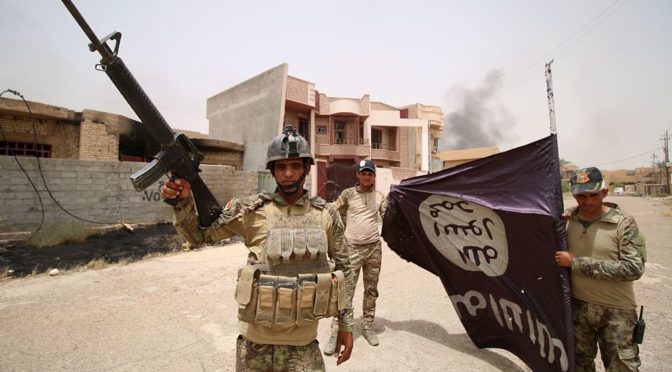
Italian Newspaper Claims Mafia Is Trading Weapons with ISIS for Stolen Libyan Artifacts

The Italian newspaper La Stampa claims the Camorra and ‘Ndràngheta mafia groups in southern Italy are giving weapons to the terrorist organization ISIS in exchange for rare cultural artifacts stolen from Libya, writes Hannah McGivern of the Art Newspaper.

The weapons are being smuggled into Italy from Ukraine and Moldova by Russian criminals. The artifacts––taken from Sabratha, Cyrene, and Leptis Magna in Libya, all UNESCO World Heritage Sites—are being shipped from the Libyan city Sirte, a former ISIS presidio, to Gioia Tauro in Calabria, a port that ‘Ndràngheta members have used for pumping cocaine into Europe.

La Stampa journalist Domenico Quirico posed as an antiquities dealer to infiltrate ‘Ndràngheta-controlled trade around Naples. He was offered a carved head from what seemed to be a second-century Roman statue for nearly $66,000 and saw pictures of a Greek god figure available for about $1.1 million. Objects from Italian necropolises were also being sold. The clientele for the mafia groups appear to be located in China, Japan, Russia, and the UAE.

Italy’s interior minister, Angelino Alfano, said in a recent interview, “The criminal turnover of the so-called Islamic state comes from a series of factors, including the sale of works of art that have escaped the iconoclastic fury of the militants.” But Syria’s antiquities chief, Maamoun Abdulkarim, told the Art Newspaper that seventy percent of the artifacts taken from anti-smuggling operations in Lebanon and Syria have proven to be inauthentic.

From – http://artforum.com/news/id=64056